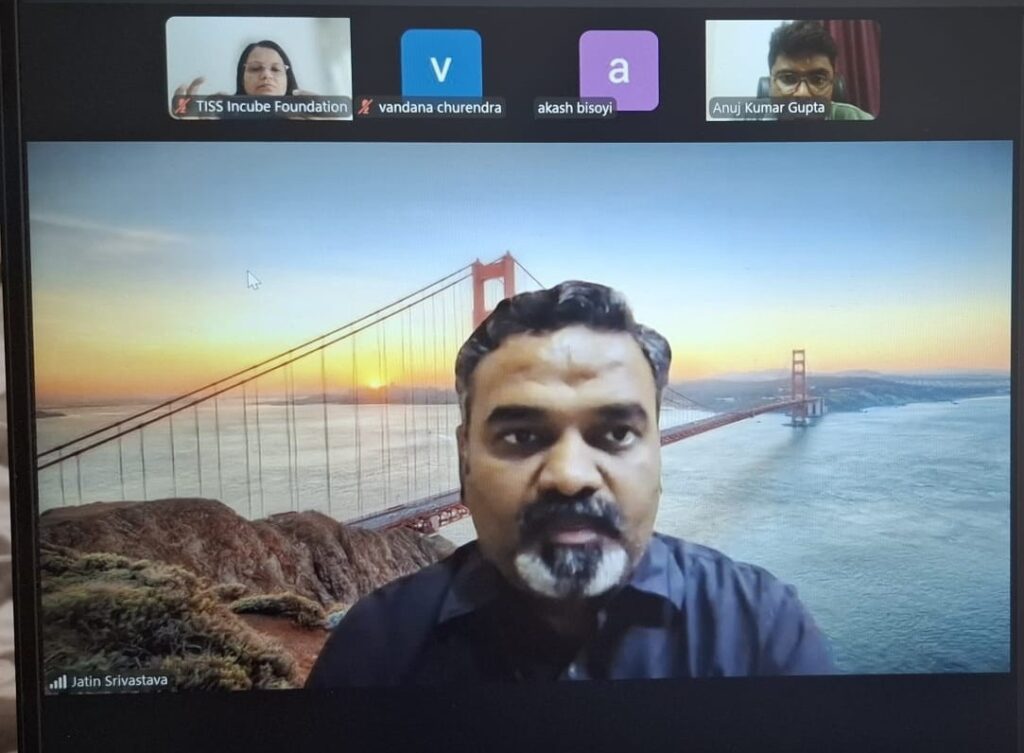

TISS Incube Foundation successfully conducted a masterclass on “Preparing for Raising Funds – Do’s and Don’ts” on 25th April at 10:00 AM. The session was led by Jatin Srivastava, Co-founder of Glocal Advisors, who brought extensive expertise in startup finance and fundraising strategy.
The session provided deep insights into the fundamental pillars of fundraising, focusing on viability, investability, and fundability of startups. The speaker emphasized that before approaching investors, ventures must ensure positive unit economics at the transaction level, as this forms the foundation for sustainable growth and credibility.
A detailed overview of funding sources was presented, including grants, loans, and equity financing. It was highlighted that while grants are often the easiest and cheapest source of capital, they should be treated as supplementary funding rather than a primary revenue stream. The discussion introduced a clear hierarchy of funding, where grants are followed by operational cash flows and then debt instruments such as loans.
Mr. Srivastava stressed the importance of financial discipline and legal preparedness, advising startups to maintain clean financial records, proper documentation, and separate legal business entities to enhance their readiness for fundraising. He also underscored the growing importance of cash flow positivity and business viability, particularly in the current investment environment where investors are increasingly cautious, especially in deep technology sectors.
The session included an interactive segment where participants shared their experiences and queries. One participant highlighted challenges faced due to over-reliance on grants, reinforcing the speaker’s point that grants should be viewed as an additional support mechanism rather than a core funding strategy.
In response to a query regarding funding options for SaaS businesses, Mr. Srivastava clarified that intangible assets such as software and services are eligible for financing, including working capital and term loans. He pointed out relevant government-backed schemes such as Pradhan Mantri Mudra Yojana (Mudra Yojana) and Prime Minister Employment Generation Programme (PMEGP), while noting that service-based businesses may require additional documentation during loan processing.
Additionally, the speaker encouraged startups to explore Corporate Social Responsibility (CSR) grants and government funding opportunities, particularly for product development, research, and development (R&D). He recommended identifying potential funding sources by reviewing corporate sustainability and climate-focused initiatives available on company websites.
Overall, the masterclass was highly informative and practical, equipping incubates with a clear understanding of fundraising readiness, financial strategy, and the importance of building sustainable, investment-worthy ventures.